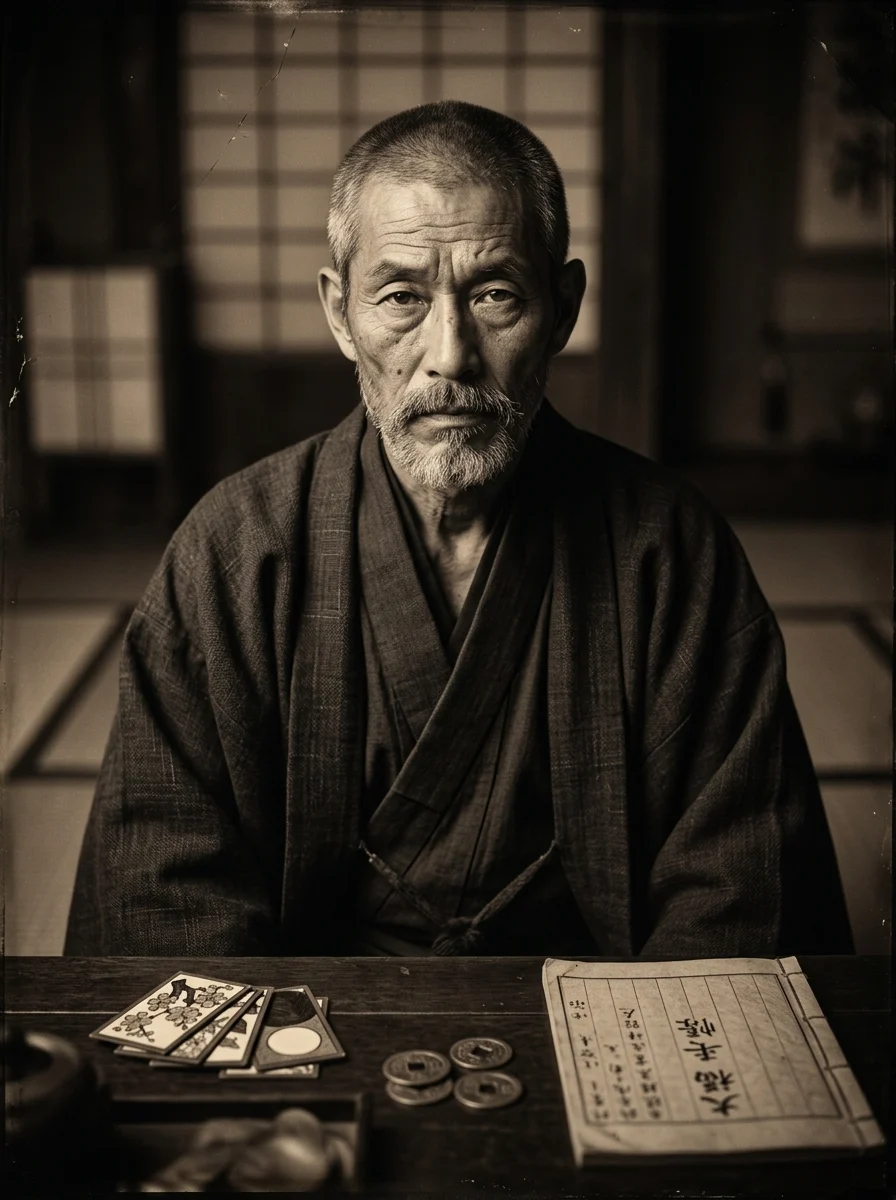
1880s Shimizu Port · Hanafuda Ledger
Shimizu no Jirocho’s
Five-Card Ledger
Whether to press on or fold — settled in a single word.
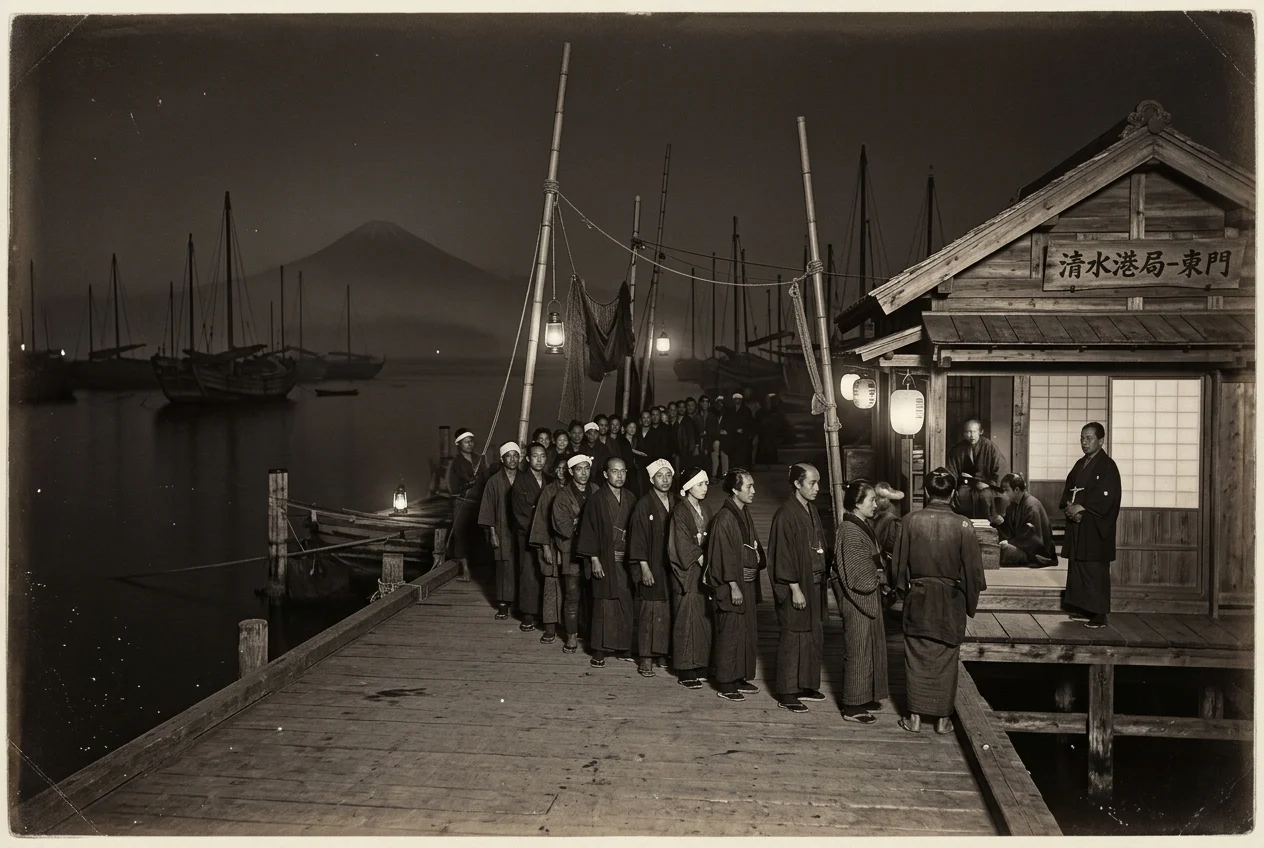
Late Tokugawa Japan, Shimizu Port in Suruga Province.
Chogoro, adopted son of the rice merchant Jirohachi,
became known along the coast as Jirocho.
In his youth, a wandering monk reportedly told him
he would not live past twenty-five.
He staked his remaining years on the gaming mats and post roads,
and lived to seventy-three.
In 1868, when sailors of a defeated warship
drifted ashore in Shimizu Bay,
and no one dared touch the dead,
he pulled them from the water and buried them.
“Among the dead, there are no sides,” he is said to have answered.
Anyone up late weighing whether to stay at work or walk out,
Anyone facing an exam, promotion, or post and asking if they make the cut,
Anyone who just watched a trusted partner begin to waver,
Anyone asking whether to fold this round or hold the line.
From here on is the tale this ledger keeps.
At the mat, he never trusted flattering talk.
He heard the reading, and he set his own table.
Once all the cards were turned, he gave only one verdict.
 “Bright Hand.”
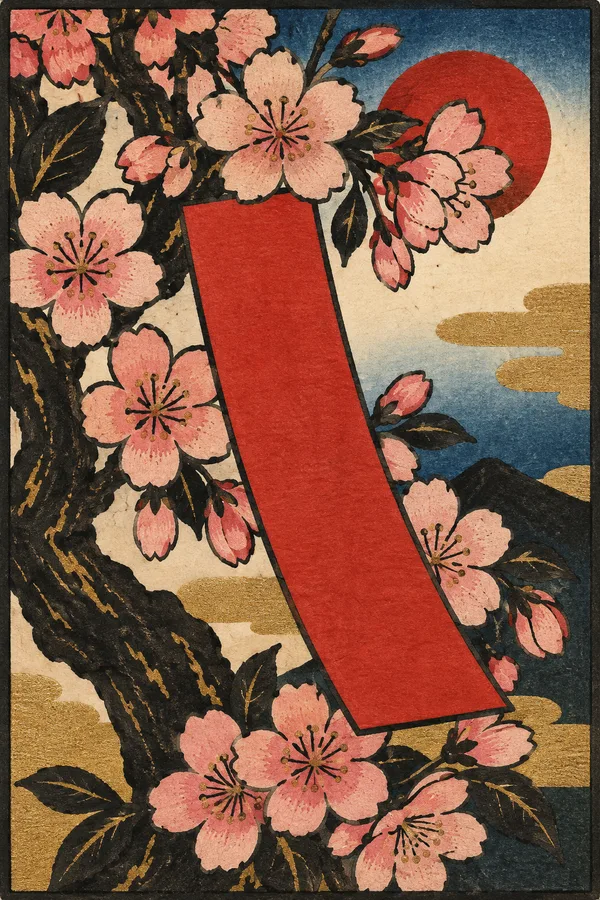 “Ribbon Hand.”
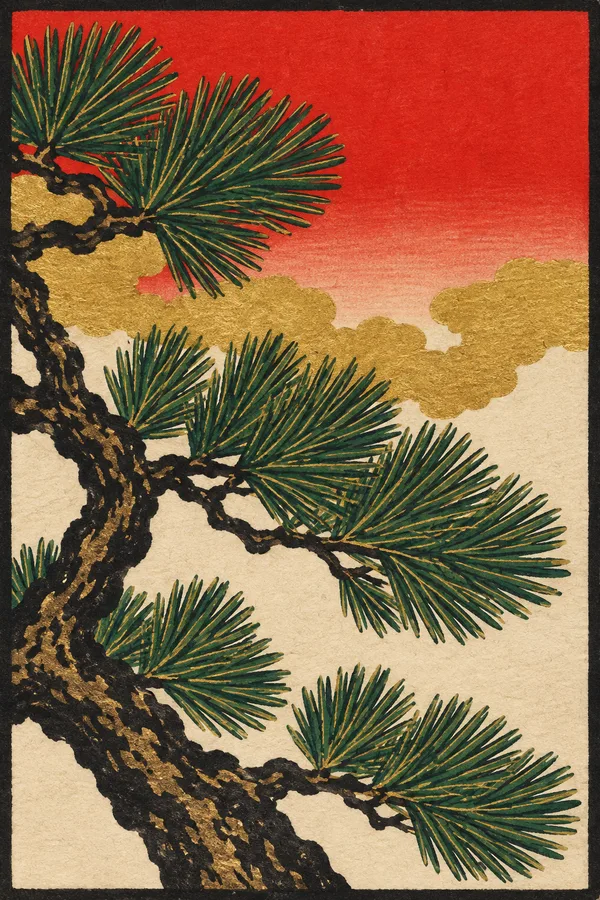 “Chaff Hand.”
Every guest who came to him cut five cards with their own hand.
From the first four, he read the hand they held and the month to move;
from the fifth and last,
he uncovered the hidden turn that could upend a won table.
“Hear the reading, then set your own table.”
In the summer of 1893, he closed his eyes in Shimizu
at the age of seventy-three.
Though he settled countless wagers for those who sought him out,
he never once wrote a line of easy comfort.
What remains is a single Hanafuda ledger —
recording every table pressed and every table folded,
all the way to how each one ended.
*Before You Begin
When it is time to press, the ledger says press;
when it is time to fold, it says fold.
A word before opening the Hanafuda ledger. This reading pairs the star of your birth year with five Hanafuda cards you cut by your own hand to read the table before you.
If the count says to move, it will tell you when; if it says to step back, it will tell you plainly. If you are only looking for easy comfort, close the ledger here.