
Ming
Ming Chongyan’s
Abacus Ledger
Do you believe big money will come at least once?
Three wooden dice reveal your abacus.
The abacus is the board where money is counted.
- Anyone who believes a windfall will come at least once,
- Anyone lying awake weighing whether to put money in or pull it back,
- Anyone asking whether now is the time to expand the board or fold it.
-
First Round
Tang Dynasty under Emperor Gaozong, Eastern Capital Luoyang
Ming Chongyan was the Daoist master
kept close by the Emperor and Empress.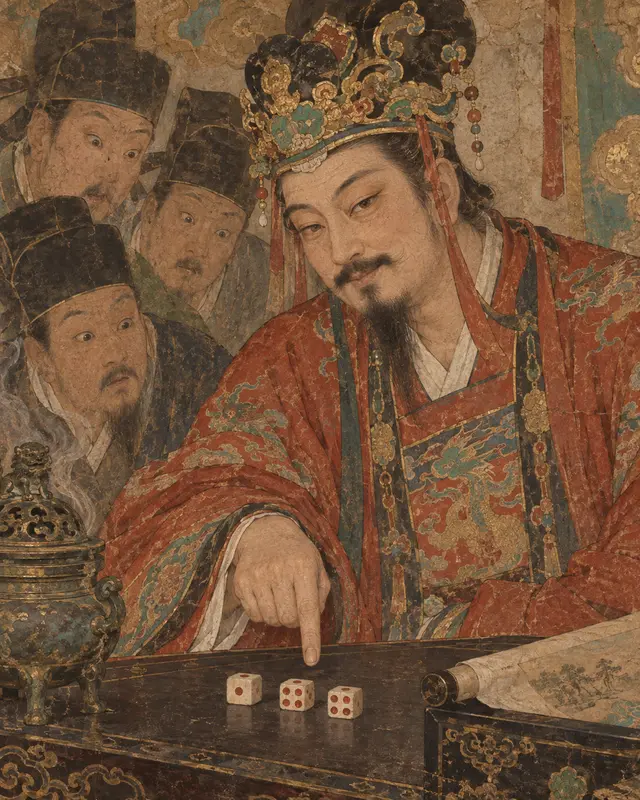
-
Second Round
Word spread through the palace that he commanded spirits,
and the Emperor gave him office by the throne.Later tales say that when he threw ordinary dice at gaming tables,
whatever number he called came up.Yet when reading another’s fortune, he did otherwise.
He handed over his own three carved wooden fortune dice for the guest to throw. -
Third Round
Instead of numbers, the wooden dice bore carved auspicious emblems.
In his abacus ledger he wrote only three lines: the emblems thrown, this year’s roll, and when to move. -
Fourth Round
Even before the Emperor, he refused to flatter
the Crown Prince’s vessel.So bluntly that many suspected those words cost him his life.
Over any board, he delivered only one of three verdicts.
- “A Big Roll.”
- “A Half Roll.”
- “An Empty Roll.”
-
In 679, he fell to a bandit’s blade on a night road,
and the killer was never caught.On the final leaf of the abacus ledger he left behind,
only the three empty places for the dice remain drawn.“Those three places—today,
let your own hand fill them.”
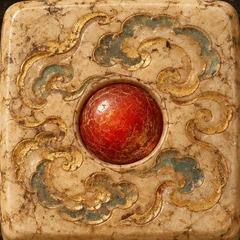
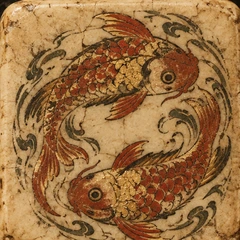
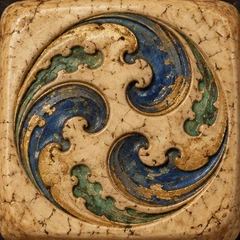
*Note
I do not throw the dice.
Your own hand throws them.
At gaming tables I rolled ordinary dice, but when reading another’s fortune I hand my three wooden fortune dice to you. Roll the wooden dice in the bowl first to read the present board, then set your birth time beside them to count this year’s money roll.
To anyone looking to expand a board on borrowed money, I say fold. If you came with your mind already made up on what you want to hear, close the ledger here.